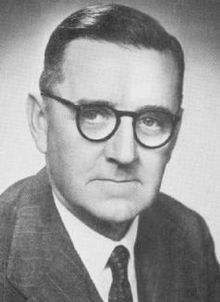
Sir Philip Albert Martin McBRIDE [6082]
- Born: 18 Jun 1892, Kooringa, South Australia
- Marriage (1): Lady Rita Irene CREWES [6091] on 14 Dec 1914 in Methodist Church, Kooringa, South Australia
- Died: 14 Jul 1982, Medindie, Adelaide, South Australia at age 90
- Crem.: 16 Jul 1982, Centennial Park Crematorium, Adelaide (Burra Cemetery)

 General Notes: General Notes:
1892 SA Births 503/117 MCBRIDE Philip Albert Martin Albert James MCBRIDE Louisa LANE, Burra
1982 Advertiser McBRIDE Philip Albert Martin
1982 Burra Cemetery Memorial Inscription McBRIDE Philip Albert Martin 1982
Burra Cemetery Burial Register McBRIDE Philip Albert Martin 90y
Reference Wikipedia http://en.wikipedia.org/wiki/Philip_McBrideThe Right Honourable
Sir Philip McBride KCMG
Member of the Australian Parliament for Grey
In office 19 December 1931 - 21 September 1937
Senator for South Australia
In office 21 October 1937 - 30 June 1944
Member of the Australian Parliament for Wakefield
In office 28 September 1946 - 14 October 1958
Personal details: Born18 June 1892; Died14 July 1982 (aged 90)
Political party UAP (1931-44) Liberal (1944-58)
Sir Philip Albert Martin McBride KCMG (18 June 1892 - 14 July 1982) was an Australian politician.
McBride was born into a well-known pastoral family and educated at Burra Public School and Prince Alfred College in Adelaide. In 1931, he was elected as the member for Grey in the Australian House of Representatives, representing the United Australia Party. Before the 1937 general election, he struck a deal with fellow grazier and Country Party senator, A. O. Badman, who resigned from the Senate and contested Grey, which he won. McBride was elected by a joint sitting of both Houses of the South Australian parliament to fill the resulting casual Senate vacancy.
McBride was Assistant Minister for Commerce from April 1939 to August 1940. He was Minister for the Army and Minister for Repatriation from March to October 1940 in Robert Menzies ministry. In the third Menzies Ministry, he was Minister for Supply and Development from October 1940 to June 1941 and Minister for Munitions from October 1940 to the defeat of the Menzies government in August 1941. He was defeated in the 1943 general election.
In the 1946 general election, he was elected as the member for Wakefield for the Liberal Party of Australia and held it to his retirement in 1958, as a member of the Liberal and Country League from 1951. Following the election of the Menzies government in 1949, he became Minister for the Interior from 1949 to 1950. In 1950, he was appointed Minister for Defence, a position he retained to his retirement.
After McBride's retirement, he was Federal President of the Liberal Party from 1960 to 1965. He was survived by his widow and two of his sons.
McBride, Sir Philip Albert (1892-1982) by David Lee
This article was published in Australian Dictionary of Biography, Volume 18, (MUP), 2012
http://adb.anu.edu.au/biography/mcbride-sir-philip-albert-15051
Sir Philip Albert Martin McBride (1892-1982), pastoralist and politician, was born on 18 June 1892 at Kooringa, Burra, South Australia, eldest child of South Australian-born parents Albert James McBride, pastoralist and businessman, and his wife Louisa, née Lane. Educated at Burra Public School and Prince Alfred College, Adelaide, Philip worked on family farms in partnership with his father. In 1920 father and son became joint managing directors of A. J. & P. A. McBride Ltd, a grazing company that later controlled vast sheep stations stretching across the arid pastoral zone of northern South Australia. After Albert's death in 1928, Philip became its sole chairman, a position he was to hold for fifty years. He served two terms as president of the Stockowners' Association of South Australia (1929-31) and was its representative on the Australian Woolgrowers' Council in the 1930s. On 16 December 1914 at the Methodist Church, Kooringa, he had married Rita Irene (Rene) Crewes, an artist.
Unsuccessfully contesting the State seats of Newcastle (1927) and Burra (1930), McBride won the Federal South Australian seat of Grey for the United Australia Party in 1931, and retained it in 1934 as a Liberal Country League candidate. Believing that Australia's recovery from the Depression depended on the health of its primary industries, he supported the LCL director, Charles Hawker, in opposing policies that might embarrass Britain and in arguing for the lowering of tariffs and the implementation of the Ottawa Agreement. Before the 1937 general election, he struck a deal with a Country Party senator, fellow grazier, A. O. Badman, who resigned from the Senate and contested Grey, which he won. McBride was nominated at a joint sitting of both Houses of the South Australian parliament to fill the casual Senate vacancy. He was elected to a six-year term from 1937.
Appointed minister without portfolio assisting the minister for commerce (1939-40) in (Sir) Robert Menzies' UAP government, McBride became, in 1940, a member of the Economic Cabinet, minister for the army, minister for repatriation, and a member of the War Cabinet. Following the 1940 election, he became minister for munitions and minister for supply and development. He was made a member of the Advisory War Council under Prime Minister (Sir) Arthur Fadden in 1941. In Opposition from October that year, he became deputy-leader in the Senate but was defeated in the 1943 Federal election. He remained a senator until 30 June 1944.
A staunch supporter of Menzies in the UAP leadership crisis of 1941, McBride became a member of the provisional executive of the new Liberal Party of Australia, which Menzies had played a prominent part in establishing. Winning the Federal seat of Wakefield for the Liberals in 1946, McBride was appointed minister for the interior (1949-50) when the Liberal-Country coalition regained office in December 1949. As minister for defence from 1950 to 1958-with the additional portfolios of navy and air in May-July 1951-he presided over the defence program (1950-54) to prepare an Australian expeditionary force for an allied defence of the Middle East against the Soviet Union in a possible world war. At this time he was also in charge of the commitment of forces to Korea and Malaya. Loyal to Menzies, he supported him in the concept of 'forward defence' to improve national security by fighting alongside powerful allies (notably the United States of America) in Asia.
By 1956 the power and influence of McBride's long-serving secretary, Sir Frederick Shedden, and the unwieldy structure of the Department of Defence were under scrutiny. Menzies criticised Shedden, who had not moved to Canberra from Melbourne and who remained bonded to Britain when Australia was deepening its strategic relationships with the USA. McBride's control of the defence portfolio was also questioned. He was seen as a dedicated, hard-working co-ordinator rather than a decisive leader. Menzies felt that a younger minister was needed in the position. After the 1957 appointment of the (Sir Leslie) Morshead Committee to examine Australia's defence structure, McBride decided, in May 1958, not to contest the next election.
Leaving parliament in December that year, he resumed directorships of Elder Smith & Co. Ltd, and, Wallaroo-Mount Lyell Fertilisers Ltd, which he had relinquished while holding ministerial office. He also joined the board of the Bank of Adelaide. Chairing Elder Smith & Co. Ltd, he became the first chairman (1963-78) of the newly merged Elder Smith Goldsbrough Mort Ltd. Appointed KCMG (1953) and privy councillor (1959), he played a healing role as Federal president (1960-65) of the Liberal Party by promoting a more harmonious relationship between the executive and the political wing.
Described by Sir Sydney Rowell as 'a likeable personality', McBride was sympathetic towards younger parliamentarians. While he held strong views almost-according to Menzies-to 'the point of obstinacy', his optimism and tact made him a steadying member of the team. His political opponent Clyde Cameron described him as intelligent, honest and reliable. Survived by his wife and two sons, Sir Philip died on 14 July 1982 at Medindie and was cremated. His second son, Keith, had been killed in action with the Royal Australian Air Force in 1942.
The Advertiser Thursday 15 July 1982
Death Notice
McBRIDE, Sir Philip Albert Martin KCMG, PC - On July 14 at a private hospital. Dearly beloved husband of Lady Rita Irene McBride and loved father of Philip, Peter and the late Keith. Aged 90 years.
McBRIDE, Sir Philip Albert Martin KCMG, PC - Died July 14 1982. Co-founder in 1920 and Chairman for 50 years of AJ & PA McBride Pty. Ltd. Inserted with respect on behalf of past and present employees.
Funeral Notice
McBRIDE. - THE FRIENDS of the late SIR PHILIP ALBERT MARTIN McBRIDE, KCMG. PC are advised that his Funeral Service will be conducted in the Malvern Uniting Church, Marlborough St. Malvern, on FRIDAY, at 12 noon, and will be followed by a private service at the Centennial Park Crematorium. Alfred James & Sons Pty Ltd SAFDA. Unley, Mile End, Prospect, Alberton, Morphett Vale. 2728555.
Burra Cemetery (http://www.goyder.sa.gov.au/page.aspx?c=12487)
Surname: MCBRIDE
Given Names: PHILLIP ALBERT MARTIN
Cemetery: Burra Cemetery
Plot/Grave/Niche: 1904
Age at Death: 90
Date of Burial: 27/08/1982
Minister Officiating: CJ PEARCE
Grant Number: 1904
Research Notes:
McBride, Sir Philip Albert (1892– 1982) by David Lee
This article was published in Australian Dictionary of Biography, Volume 18, (MUP), 2012
http://adb.anu.edu.au/biography/mcbride-sir-philip-albert-15051
Sir Philip Albert Martin McBride (1892– 1982), pastoralist and politician, was born on 18 June 1892 at Kooringa, Burra, South Australia, eldest child of South Australian-born parents Albert James McBride, pastoralist and businessman, and his wife Louisa, née Lane. Educated at Burra Public School and Prince Alfred College, Adelaide, Philip worked on family farms in partnership with his father. In 1920 father and son became joint managing directors of A. J. & P. A. McBride Ltd, a grazing company that later controlled vast sheep stations stretching across the arid pastoral zone of northern South Australia. After Albert's death in 1928, Philip became its sole chairman, a position he was to hold for fifty years. He served two terms as president of the Stockowners' Association of South Australia (1929-31) and was its representative on the Australian Woolgrowers' Council in the 1930s. On 16 December 1914 at the Methodist Church, Kooringa, he had married Rita Irene (Rene) Crewes, an artist.
Unsuccessfully contesting the State seats of Newcastle (1927) and Burra (1930), McBride won the Federal South Australian seat of Grey for the United Australia Party in 1931, and retained it in 1934 as a Liberal Country League candidate. Believing that Australia's recovery from the Depression depended on the health of its primary industries, he supported the LCL director, Charles Hawker, in opposing policies that might embarrass Britain and in arguing for the lowering of tariffs and the implementation of the Ottawa Agreement. Before the 1937 general election, he struck a deal with a Country Party senator, fellow grazier, A. O. Badman, who resigned from the Senate and contested Grey, which he won. McBride was nominated at a joint sitting of both Houses of the South Australian parliament to fill the casual Senate vacancy. He was elected to a six-year term from 1937.
Appointed minister without portfolio assisting the minister for commerce (1939-40) in (Sir) Robert Menzies' UAP government, McBride became, in 1940, a member of the Economic Cabinet, minister for the army, minister for repatriation, and a member of the War Cabinet. Following the 1940 election, he became minister for munitions and minister for supply and development. He was made a member of the Advisory War Council under Prime Minister (Sir) Arthur Fadden in 1941. In Opposition from October that year, he became deputy-leader in the Senate but was defeated in the 1943 Federal election. He remained a senator until 30 June 1944.
A staunch supporter of Menzies in the UAP leadership crisis of 1941, McBride became a member of the provisional executive of the new Liberal Party of Australia, which Menzies had played a prominent part in establishing. Winning the Federal seat of Wakefield for the Liberals in 1946, McBride was appointed minister for the interior (1949-50) when the Liberal-Country coalition regained office in December 1949. As minister for defence from 1950 to 1958— with the additional portfolios of navy and air in May-July 1951— he presided over the defence program (1950-54) to prepare an Australian expeditionary force for an allied defence of the Middle East against the Soviet Union in a possible world war. At this time he was also in charge of the commitment of forces to Korea and Malaya. Loyal to Menzies, he supported him in the concept of 'forward defence' to improve national security by fighting alongside powerful allies (notably the United States of America) in Asia.
By 1956 the power and influence of McBride's long-serving secretary, Sir Frederick Shedden, and the unwieldy structure of the Department of Defence were under scrutiny. Menzies criticised Shedden, who had not moved to Canberra from Melbourne and who remained bonded to Britain when Australia was deepening its strategic relationships with the USA. McBride's control of the defence portfolio was also questioned. He was seen as a dedicated, hard-working co-ordinator rather than a decisive leader. Menzies felt that a younger minister was needed in the position. After the 1957 appointment of the (Sir Leslie) Morshead Committee to examine Australia's defence structure, McBride decided, in May 1958, not to contest the next election.
Leaving parliament in December that year, he resumed directorships of Elder Smith & Co. Ltd, and, Wallaroo-Mount Lyell Fertilisers Ltd, which he had relinquished while holding ministerial office. He also joined the board of the Bank of Adelaide. Chairing Elder Smith & Co. Ltd, he became the first chairman (1963-78) of the newly merged Elder Smith Goldsbrough Mort Ltd. Appointed KCMG (1953) and privy councillor (1959), he played a healing role as Federal president (1960-65) of the Liberal Party by promoting a more harmonious relationship between the executive and the political wing.
Described by Sir Sydney Rowell as 'a likeable personality', McBride was sympathetic towards younger parliamentarians. While he held strong views almost— according to Menzies— to 'the point of obstinacy', his optimism and tact made him a steadying member of the team. His political opponent Clyde Cameron described him as intelligent, honest and reliable. Survived by his wife and two sons, Sir Philip died on 14 July 1982 at Medindie and was cremated. His second son, Keith, had been killed in action with the Royal Australian Air Force in 1942.
Philip married Lady Rita Irene CREWES [6091] [MRIN: 2062] on 14 Dec 1914 in Methodist Church, Kooringa, South Australia. (Lady Rita Irene CREWES [6091] was born on 12 Jul 1892 in Kooringa, South Australia, died in Sep 1987 and was buried on 14 Sep 1987 in Burra Cemetery, South Australia.)
|